
Cover a Dialogue Scene: Master, Two-Shot, Over-the-Shoulder, Singles
Coverage is the set of shots you plan for one scene, so the editor can cut between them. For two people talking, a few standard shots cover almost everything.
The master
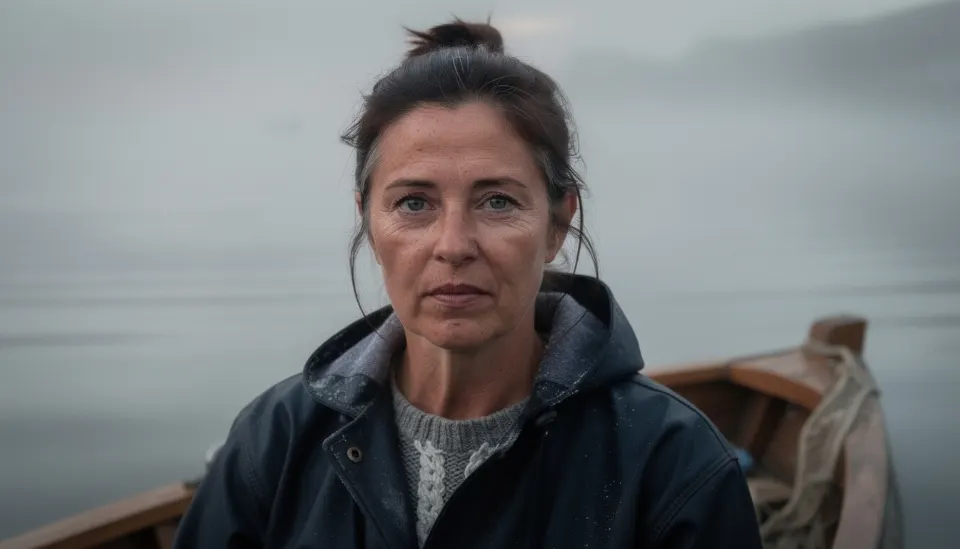
A wide shot that holds the whole scene from start to end: both people and where they are. If everything else fails, the master still tells the story.
The two-shot
Both people in one frame, closer than the master. Good for moments where how they stand together matters.
Over-the-shoulder
The camera looks past one person's shoulder at the other's face. It keeps both people in the frame and makes the talk feel connected. Plan one from each side.
Singles and close-ups
One face per frame, usually a medium close-up or close-up. These carry the strongest moments. Match the size on both sides so the cut feels even.
Reactions and inserts
A reaction is a face listening. An insert is a detail: a hand, a letter, a rope. Both give the editor places to cut and to shorten the scene.
Keep the 180-degree rule
Draw an imaginary line between the two people. Keep every camera on one side of it. Then one person always looks to screen left and the other to screen right, and the audience never loses who is looking at whom.
To cross the line on purpose, show the camera moving across it, or cut to a shot straight down the line first.
For AI video
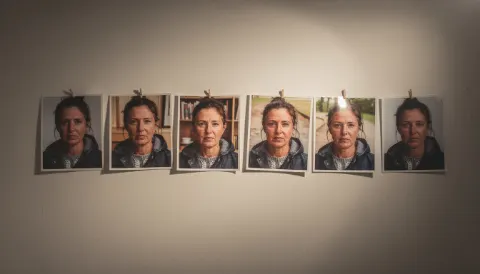
Make one shot per generation and say the eyeline in words, such as looking screen left. Use the same reference pictures for each person in every shot, so faces and clothes match across the cut.
Plan it in SEEN
In Shoot, press + Shot for each setup and name it, for example: OTS on Nora. Use Stage to place both people and test each camera before you spend a credit.
Free, in your browser, nothing to install.
Questions
How many shots does a dialogue scene need?
There is no fixed number. A common minimum is a master and one single for each person. Add over-the-shoulders and reactions when the scene matters more.
What is shot reverse shot?
Cutting between a shot of one person and a matching shot of the other from the opposite side, usually over-the-shoulders or singles.
Can I break the 180-degree rule?
Yes, when you want the audience to feel lost or that something has changed. Do it on purpose, not by accident.